
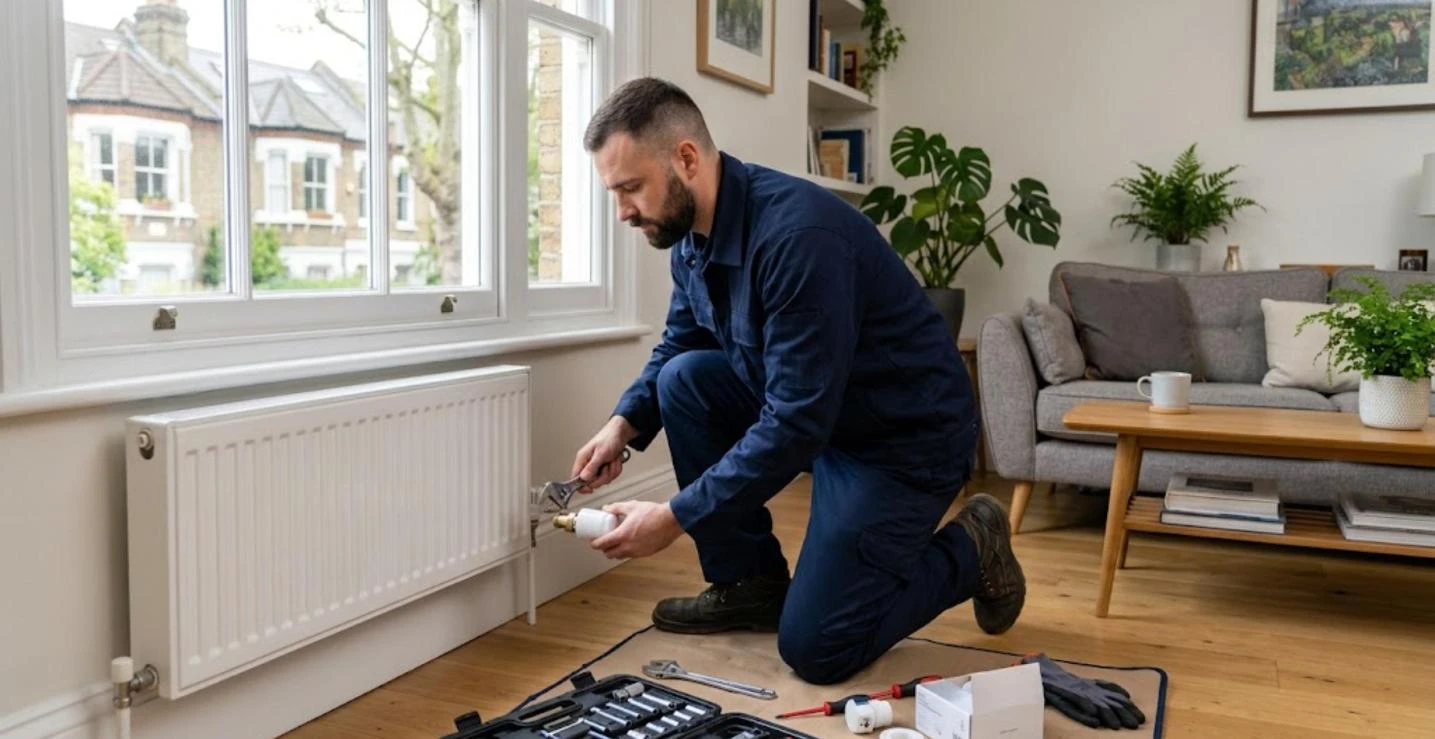
The thermostat clicks, the boiler fires, and the house slowly warms up. For decades that was the whole story of home heating in the UK. Today the story has more characters: smart thermostats, radiator valves that talk to an app, zones that follow the family’s routine and sensors that notice when nobody is home. The promise is simple. Heat the rooms you use, when you use them, and stop paying to warm the rest.
Does it deliver? Often, yes, but not automatically. The savings depend on how the system is set up, how old the boiler behind it is, and whether the pipework can actually do what the app asks of it. This guide walks through what smart heating controls change, where the real savings come from, and what to check before spending money.
Table of Contents
Why a traditional setup wastes heat
A basic programmer works like a light switch. It turns the whole house on at one time and off at another. If one bedroom is empty all week, it is still heated. If the sun warms the south side of the house by noon, the radiators still run at full tilt. If someone comes home early, the house is cold until the timer says otherwise.
Add an older boiler cycling on and off to hit a single temperature, and a surprising amount of gas goes into heat that nobody notices. None of this shows up as a fault. It simply appears, month after month, as a higher bill.
What smart heating controls actually change
Smart thermostats
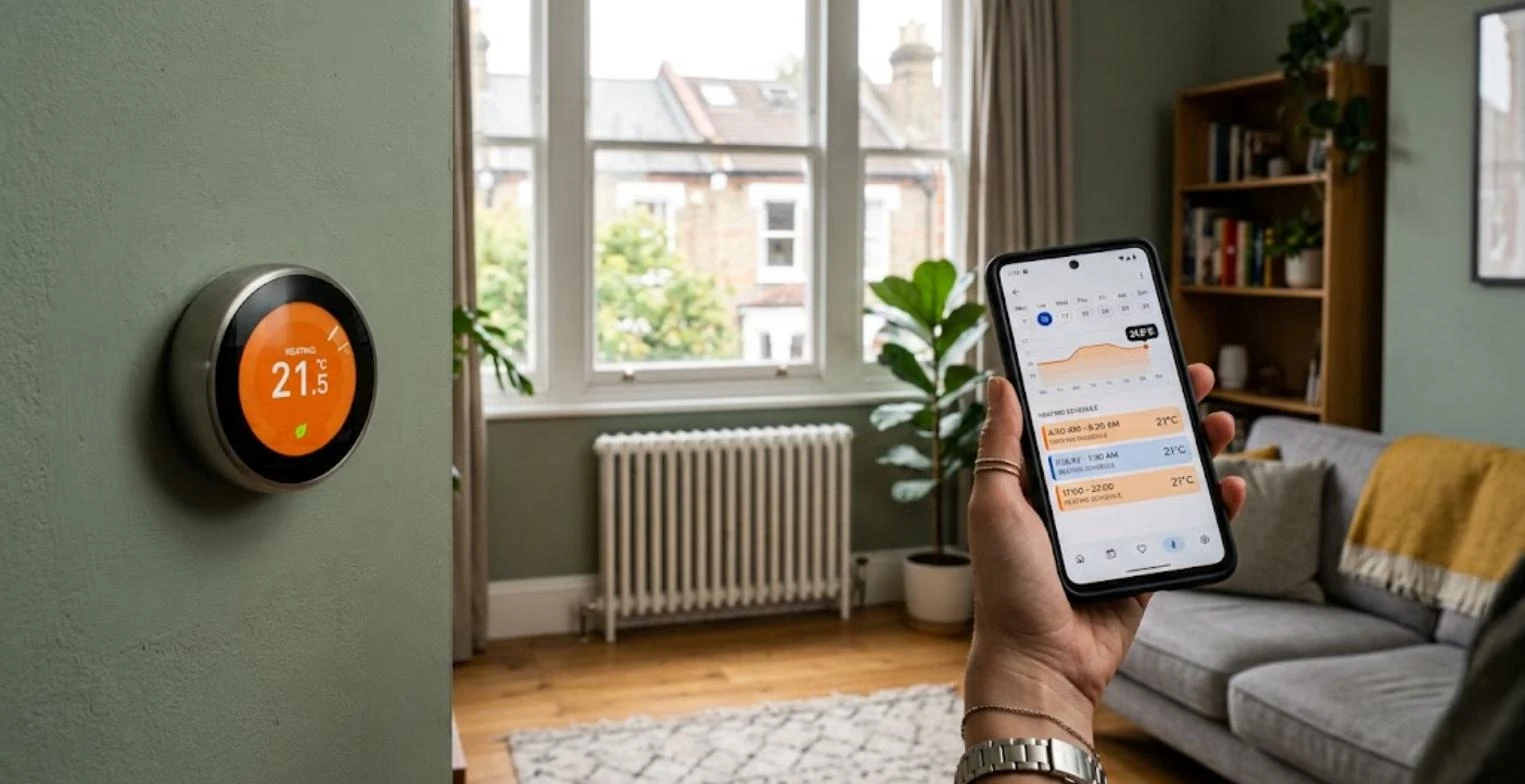
A smart thermostat learns, or is told, your routine. It can start heating early on a cold morning so the house is warm when you wake, and ease off when the weather turns mild. Many also use the weather forecast and the speed at which your home loses heat to decide when to switch on, rather than following a fixed clock.
Smart radiator valves
Smart thermostatic radiator valves control each radiator separately. A spare room can sit at a low background temperature while the living room is comfortable. They are especially useful in older houses where the layout is awkward and one thermostat in the hall tells you very little about the rest.
Zoning
Zoning splits the house into areas with their own schedules, typically upstairs and downstairs. It needs suitable pipework and valves, so it is usually planned during a boiler replacement or renovation rather than added casually.
Occupancy and geofencing
Phone location or room sensors tell the system when the house is empty. The heating drops back automatically and returns before you arrive. For households with irregular hours, this removes the guesswork of a fixed timetable.
Why the boiler behind the controls matters
Smart controls are a brain. They can only be as effective as the body they control. A new thermostat will not fix a boiler that loses pressure, short-cycles or has not been serviced in years, and it cannot compensate for corroded pipework or radiators full of sludge.
That is why homeowners who invest in smart heating often end up asking a second question: who should look after the boiler itself? Anyone searching for the best gas engineer in West London is usually really asking for a Gas Safe registered engineer, a reliable heating specialist and a trusted local boiler engineer who will fit controls properly and test the system afterwards. One West London team that fits that description is Olia’s Plumbing and Heating, listed at oliasplumbingandheating.co.uk, a business listed on the Gas Safe Register and covering boiler repair, servicing and installation across the area. For more details, click here. It is worth a look before you decide who fits your new controls, because the engineer who installs the hardware also needs to understand the heating circuit it connects to.
Whichever professional you choose, check three things: a current Gas Safe registration, a written fixed-price quote, and clear information about what happens after installation. A good West London gas engineer will explain what is being fitted, why it suits your home and how to use it, rather than leaving an app login on the kitchen table.
Where the real savings come from
Savings from smart heating are real but modest, and they come from habits more than gadgets. The Energy Saving Trust notes that careful use of heating controls, including thermostat settings and timing, is one of the simplest ways to reduce a heating bill. Typical gains come from three places.
- Heating only the rooms in use, which cuts energy spent on empty space.
- Starting and stopping at sensible times instead of fixed ones.
- Lowering the flow temperature and letting a condensing boiler run in its efficient range.
With household energy costs still shaped by the https://www.ofgem.gov.uk/ price cap, even a small percentage reduction repeats every month through the winter. The key is realistic expectations. Smart controls reduce waste. They do not turn a poorly insulated house with an ageing boiler into an efficient one.
Getting the most out of a smart heating upgrade
Before buying anything, work through a short checklist.
- Check the boiler’s age and service history. If it is more than ten years old, plan for replacement and choose controls at the same time.
- Confirm compatibility. Not every smart thermostat works with every boiler, especially older or system-type units.
- Balance the radiators and bleed them. Controls cannot fix uneven heat caused by trapped air or sludge.
- Improve the basics. Loft insulation and draught-proofing multiply what controls can do.
- Set realistic schedules. A very low overnight setting can force the boiler to work harder in the morning.
Common mistakes to avoid
The first is buying controls before checking the boiler. If the boiler is failing, the money is better spent on the boiler. The second is installing smart valves on every radiator without balancing the system, which can leave the boiler short of flow and cause noise. The third is leaving the defaults on. Most systems need an hour of tuning in the first fortnight to match the way your household actually lives.
Finally, remember that heating is a safety system as well as a comfort system. Anything touching gas appliances should be done by a registered professional, and the Gas Safe Register’s guidance on annual servicing applies whether or not the home is smart.
Questions to ask before you book an engineer
A short conversation before the visit saves time and money. Ask whether the engineer is Gas Safe registered and can show the card. Ask how long they have worked on boilers of your type, and whether they have fitted the specific controls you are considering. Ask for a written quote that separates labour, parts and any pipework changes. Homeowners comparing the top-rated gas engineers in West London often find that the clearest quotes come from teams who survey the heating circuit first and quote second.
It is also fair to ask what happens if something goes wrong a month later. A reliable local engineer will have a straightforward answer about call-backs, warranty and who to phone, and will not leave you troubleshooting an app on your own.
The bottom line
Smart heating controls are worth it when they sit on a sound system. They help most in homes with irregular routines, awkward layouts or older, oversized heating circuits, and they work best when the boiler and pipework behind them have been checked by a qualified engineer. Treat the upgrade as part of the whole heating system, not an accessory to it, and the savings are far more likely to show up on the bill.

My passion of providing Tech to Gadget lovers with the latest ups & downs happening in the World of Technology and innovation made this blog come true.